

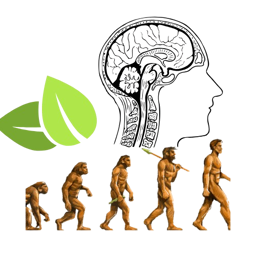
subject

Evidence for Evolution

Biology ⇒ Evolution and Diversity

Evidence for Evolution starts at 8 and continues till grade 12. QuestionsToday has an evolving set of questions to continuously challenge students so that their knowledge grows in Evidence for Evolution. How you perform is determined by your score and the time you take. When you play a quiz, your answers are evaluated in concept instead of actual words and definitions used.
See sample questions for grade 12
Describe how biogeography supports the theory of evolution.
Describe how comparative anatomy provides evidence for evolution.
Describe how embryological similarities among vertebrates support the theory of evolution.
Describe how molecular biology has contributed to our understanding of evolutionary relationships.
Describe the significance of homologous structures in evolutionary biology.
Explain how comparative embryology supports the theory of evolution.
Explain how the discovery of Archaeopteryx supports the theory of evolution.
Explain how the fossil record provides evidence for evolution.
The presence of similar genes in humans and chimpanzees is best explained by which concept? (1) Convergent evolution (2) Common ancestry (3) Artificial selection (4) Genetic drift
Which of the following best describes a vestigial structure? (1) A structure with a current function (2) A structure with no apparent function (3) A structure that is only found in fossils (4) A structure that is unique to one species
Which of the following best describes molecular evidence for evolution? (1) Similarities in DNA and protein sequences (2) Similarities in feeding habits (3) Similarities in habitat (4) Similarities in behavior
Which of the following is an example of a molecular evidence for evolution? (1) Fossilized bones (2) DNA sequence comparison (3) Beak shape variation (4) Geographic isolation
Fill in the blank: Structures that have lost their original function through evolution are called ________ structures.
Fill in the blank: The genetic code is nearly universal among all living organisms, providing strong evidence for ________ ancestry.
Fill in the blank: The process by which species evolve rapidly to fill available ecological niches is called ________ radiation.
Fill in the blank: The process by which unrelated organisms independently evolve similarities when adapting to similar environments is called ________ evolution.
DNA sequence similarities among different species provide evidence for evolution. True or False?
True or False: All similarities between organisms are due to common ancestry.
True or False: Analogous structures indicate common ancestry between species.
True or False: Embryos of fish, birds, and mammals show similar features during early development.