


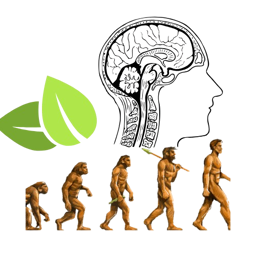
Mechanisms of Evolutionary Change
Biology ⇒ Evolution and Diversity
Mechanisms of Evolutionary Change starts at 10 and continues till grade 12.
QuestionsToday has an evolving set of questions to continuously challenge students so that their knowledge grows in Mechanisms of Evolutionary Change.
How you perform is determined by your score and the time you take.
When you play a quiz, your answers are evaluated in concept instead of actual words and definitions used.
See sample questions for grade 11
A population of 1000 individuals has 400 AA, 500 Aa, and 100 aa genotypes. Calculate the frequency of the a allele.
A population of beetles is split by a river, and over time, the two groups evolve differently. This is an example of which mechanism of evolutionary change?
A population of rabbits is reduced from 1000 to 10 due to a natural disaster. The surviving rabbits have different allele frequencies than the original population. What is this an example of?
A scientist observes that a certain allele becomes more common in a population because it helps individuals survive a new disease. Which mechanism of evolution is at work?
Describe how artificial selection differs from natural selection.
Describe how non-random mating can affect allele frequencies in a population.
Describe the difference between stabilizing, directional, and disruptive selection.
Describe the founder effect and give an example.
Describe the role of mutations in evolution.
Explain how gene flow can prevent speciation.
Explain how genetic drift can lead to the fixation or loss of alleles in a population.
Explain how mutation contributes to evolution.
Explain the difference between gene flow and genetic drift.
Explain why genetic drift has a greater effect in small populations than in large populations.
Explain why small populations are more susceptible to genetic drift.
Explain why the Hardy-Weinberg equilibrium is important in studying evolution.
A population of fish in a lake is exposed to a chemical pollutant that kills individuals with a certain genotype. Over time, the frequency of that genotype decreases. Which mechanism of evolutionary change is primarily responsible for this shift?
A population of lizards lives on two separate islands. On Island A, a new predator is introduced, while Island B remains unchanged. After several generations, the lizards on Island A develop longer legs, which help them escape predators, while those on Island B do not. Explain which mechanism(s) of evolutionary change are most likely responsible for the differences observed between the two populations.
Describe how genetic drift and gene flow can have opposite effects on the genetic variation of populations.
Explain how balancing selection can maintain genetic diversity in a population. Provide an example.
