


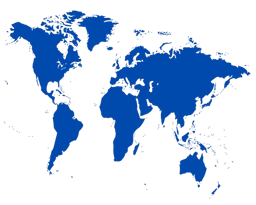
Continents and Oceans
Geography ⇒ World Geography
Continents and Oceans starts at 6 and continues till grade 12.
QuestionsToday has an evolving set of questions to continuously challenge students so that their knowledge grows in Continents and Oceans.
How you perform is determined by your score and the time you take.
When you play a quiz, your answers are evaluated in concept instead of actual words and definitions used.
See sample questions for grade 11
Describe the difference between an ocean and a sea.
Describe the process of ocean current formation and its impact on coastal climates.
Describe the significance of the Prime Meridian in relation to continents and oceans.
Explain the concept of continental drift and its significance in world geography.
Explain the concept of the 'Ring of Fire' and its relation to continents and oceans.
Explain the role of oceans in regulating the Earth's climate.
Explain why the continents are not evenly distributed between the Northern and Southern Hemispheres.
List all the continents in order of their area from largest to smallest.
Name the ocean that is the deepest in the world.
Name the ocean that surrounds the continent of Antarctica.
Which ocean is bounded by Asia to the north, Africa to the west, Australia to the east, and the Southern Ocean to the south?
